


In my earlier blog posts (not available now, though I may bring some back from my previous website), I observed that the making of images today is both wonderful and overwhelming. We are drowning in images; they appear on our social media platforms, are seen briefly, and then pass away, like leaves floating downstream in the fall: ephemera. Artificial Intelligence, too, is contributing to the cheapening of image-making.
Despite the fact that great (and not-so-great) images are everywhere, I still love capturing beauty. I have reflected on this love and realize that with each capture I get a little hit of dopamine. It’s like love at first sight. Sometimes when I am photographing a beautiful woman I actually have a reaction like fear: what I am seeing through the lens will disappear unless I capture it! I rarely have the same reaction with beauty in nature, though I do find my pulse picks up when I’m trying to capture something outdoors in light that is changing overhead. It is a capture. That’s the word we photographers use. We make something beautiful ours. “A thing of beauty is a joy forever,” wrote the poet Keats. The poem continues, “Its loveliness increases; it will never / Pass into nothingness . . . .” Unfortunately, when we are glutted with images, any particular image does pass into the nothingness of the Internet. Our attention moves on.
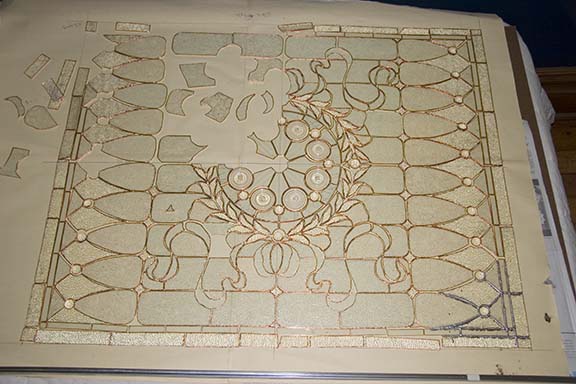
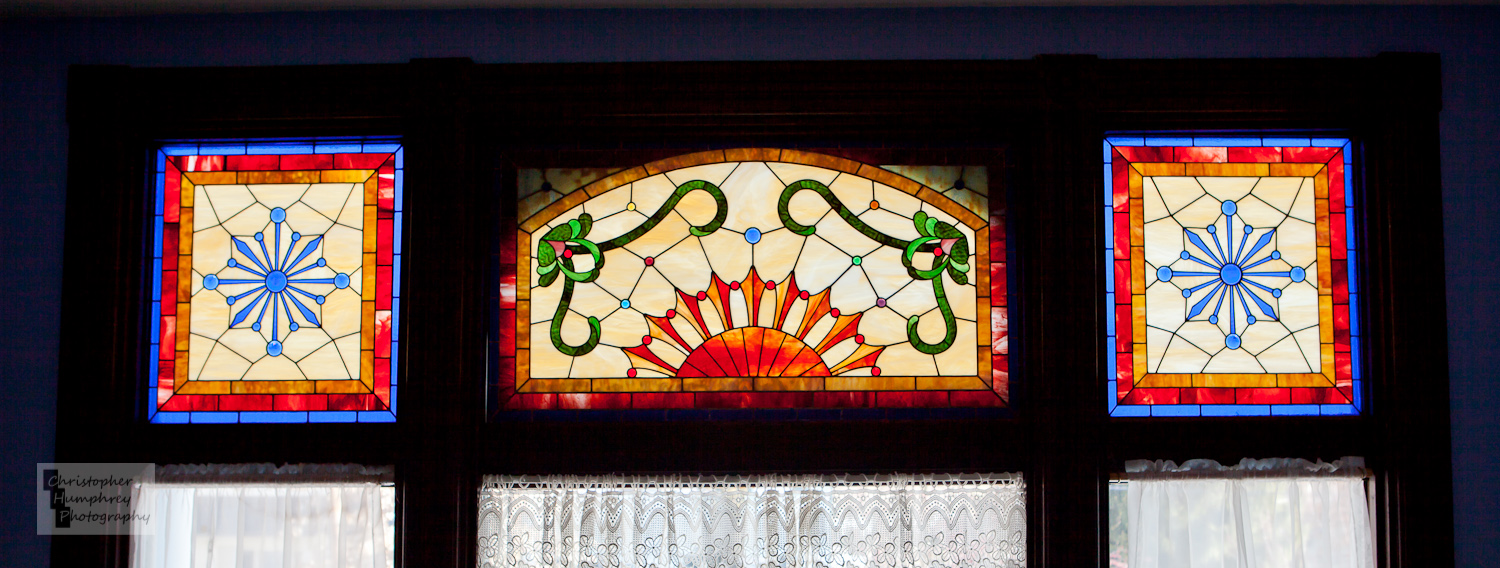
So what has this to do with stained glass? Perhaps not much, but it partly explains why I am devoting more of my creative energy to glass, which by its nature is not ephemeral. Glass is not like a digital image. Stained glass changes depending on the light falling on it, from behind or in front. As you move in front of it, the light bouncing off the textures on its surface changes, moves about. Glass can be very abstract, or representational. Perhaps most important, stained glass is likely to hang around, to be cherished, to be passed down. Even architectural stained glass may be removed from dilapidated buildings and hung separately in places like restaurants. Very seldom is it junked, unless much of the glass has been broken. Having restored a few windows, including these lead-came textured glass windows, below, I know that even these windows can be brought back, provided one has the unbroken, original glass.
(Click on images to see larger versions.)
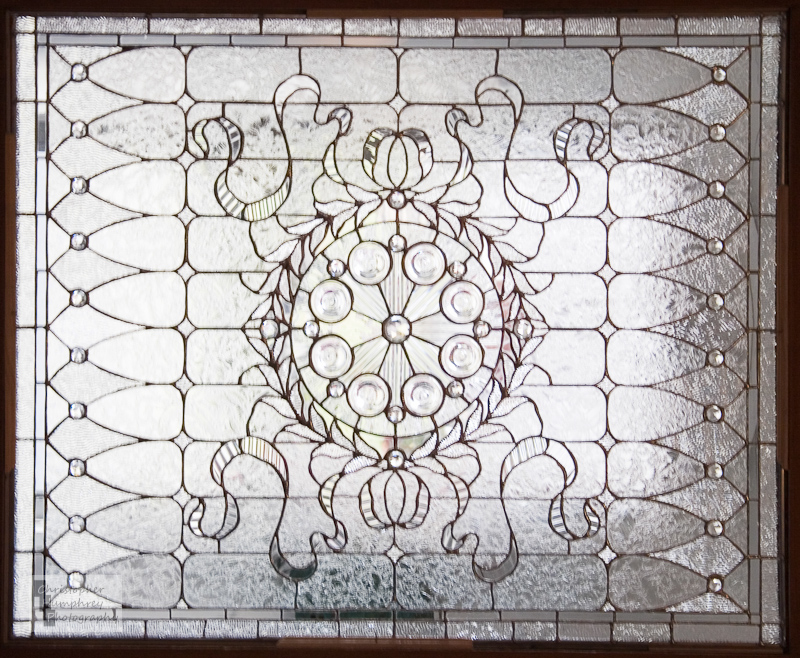
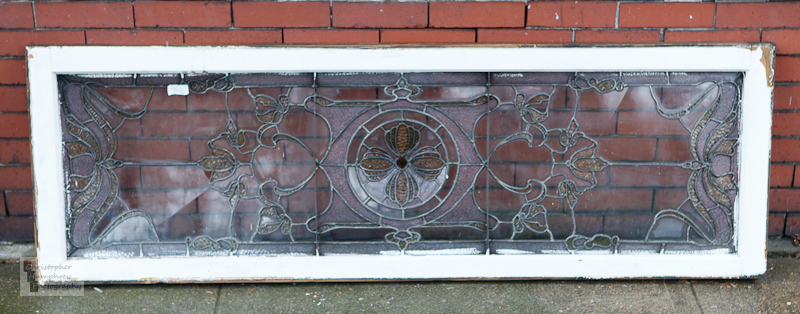
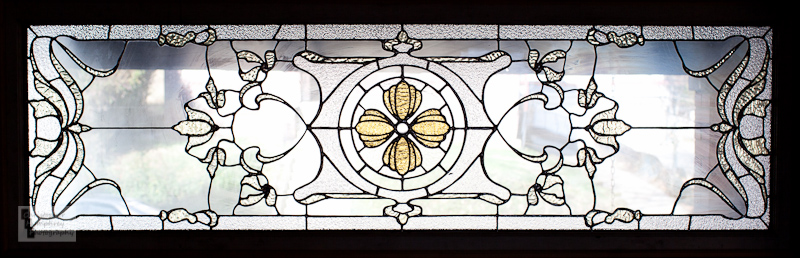
I am no longer restoring windows, however, as I am really interested in creating new designs. For a while I was interested in the traditional, stylized mold.
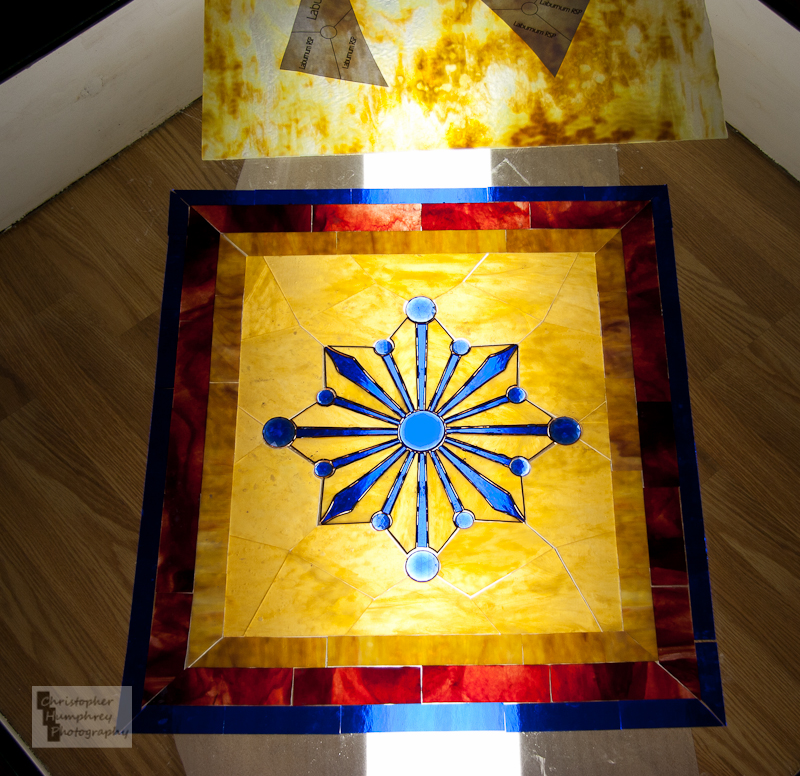
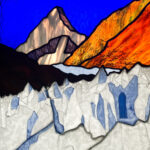
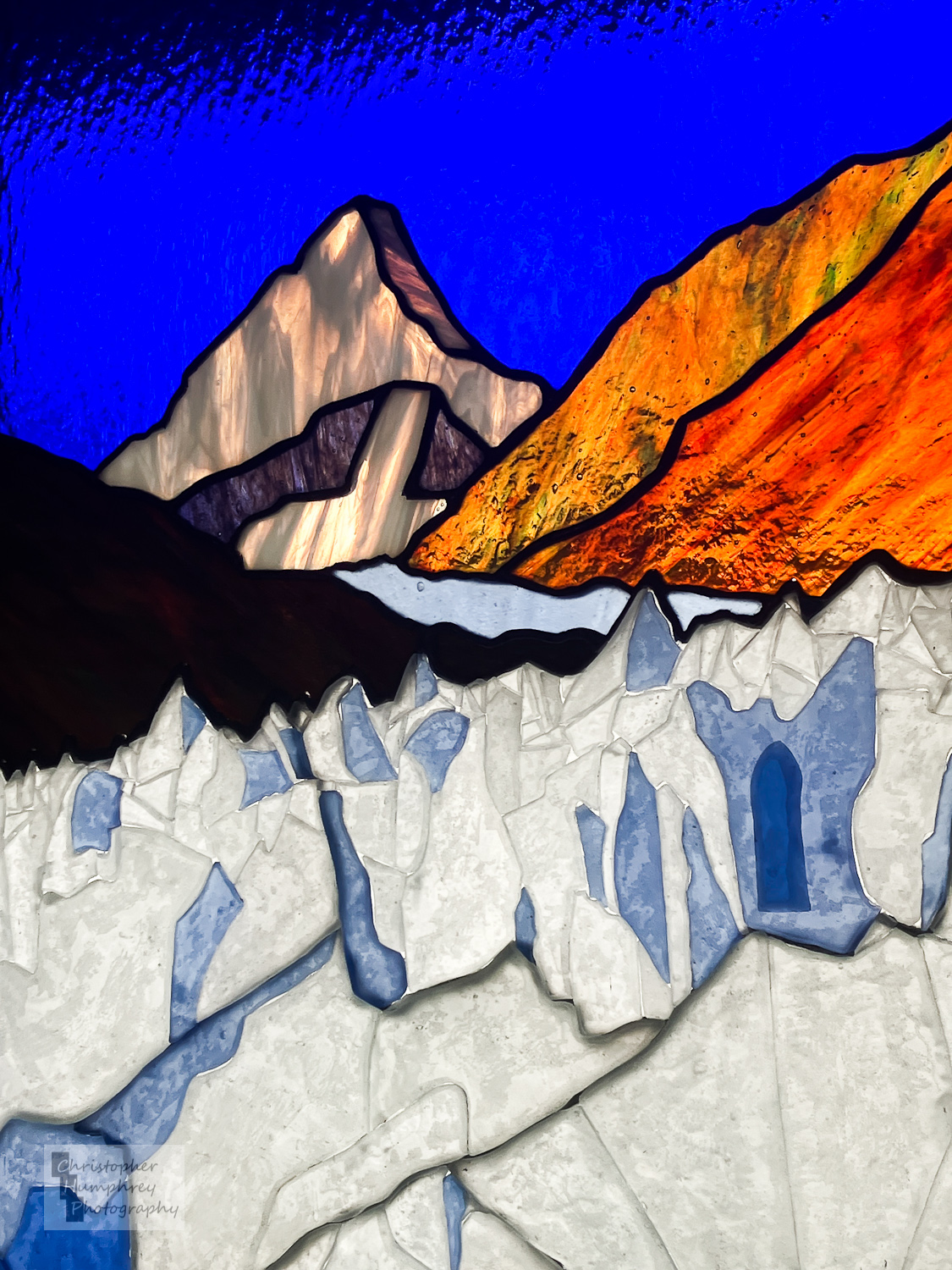
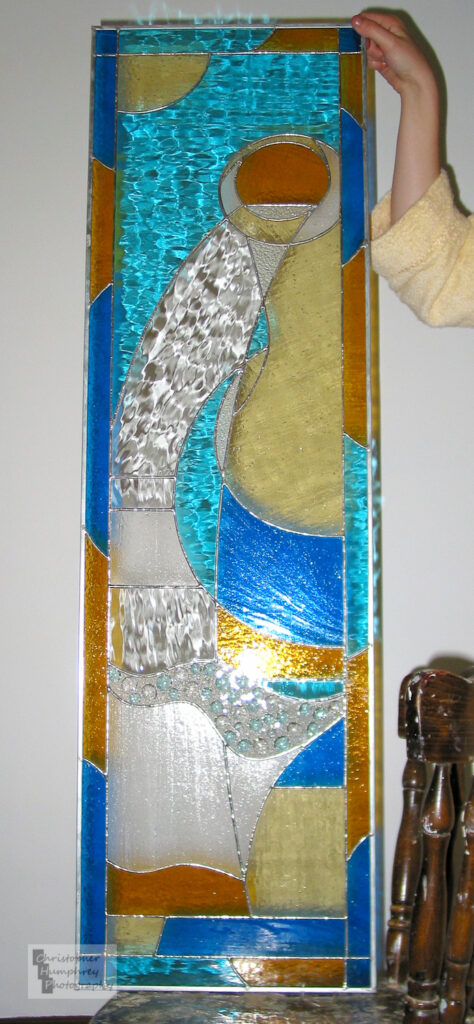
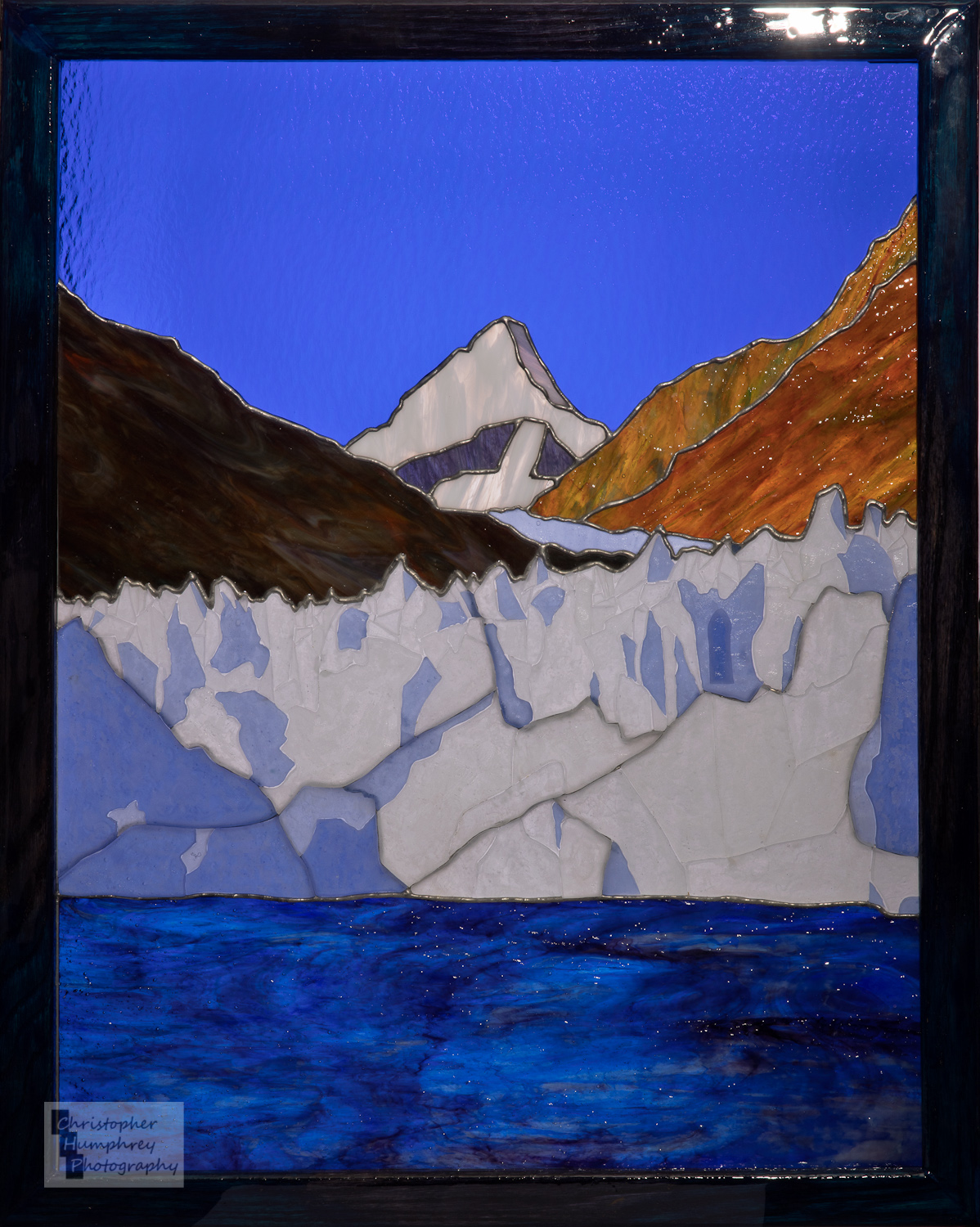
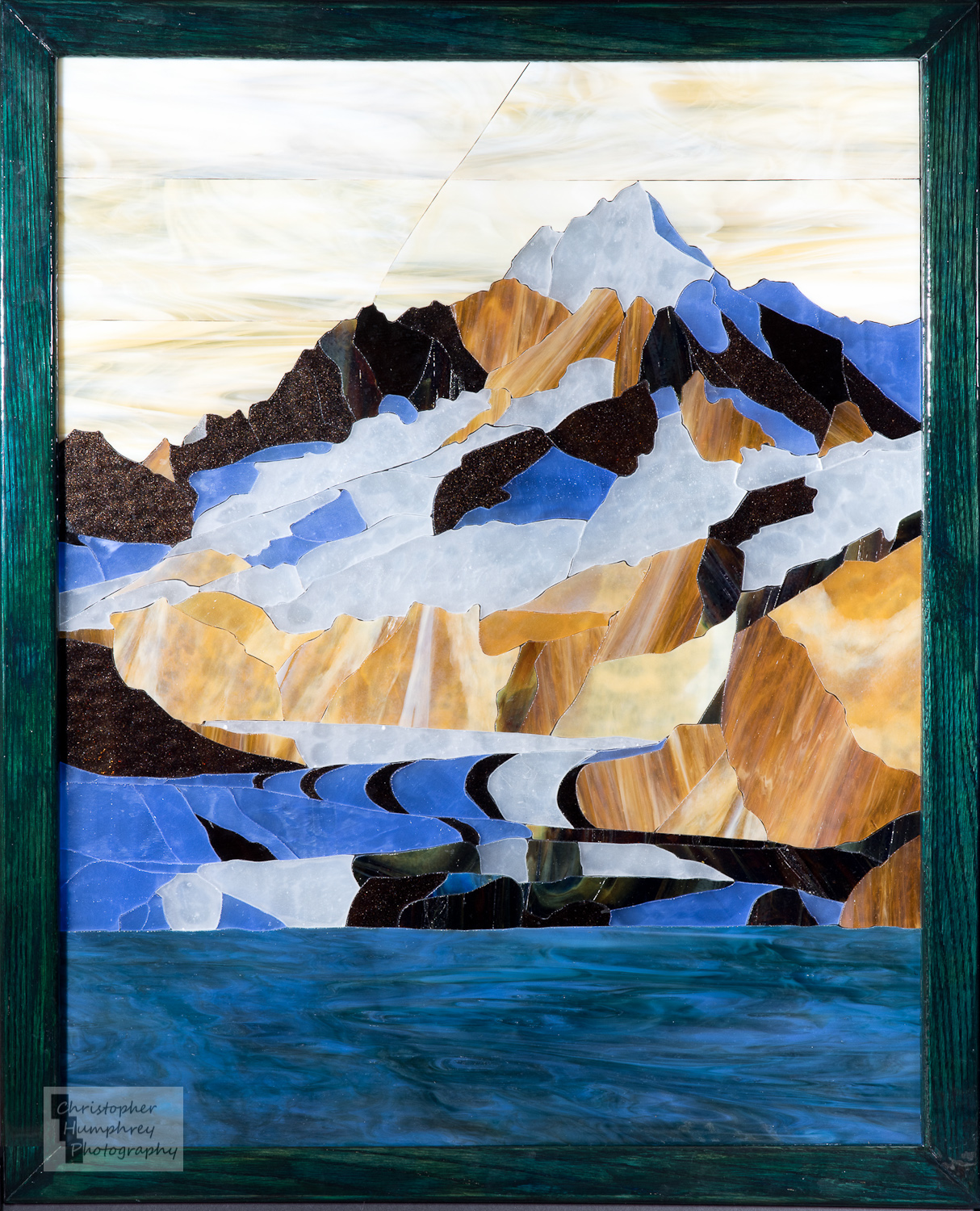
Now I am interested in more abstract work (the first), or representational work, such as my latest, Glacier Bay II: Resurrexit. it was inspired by one of my photographic images (on the right).

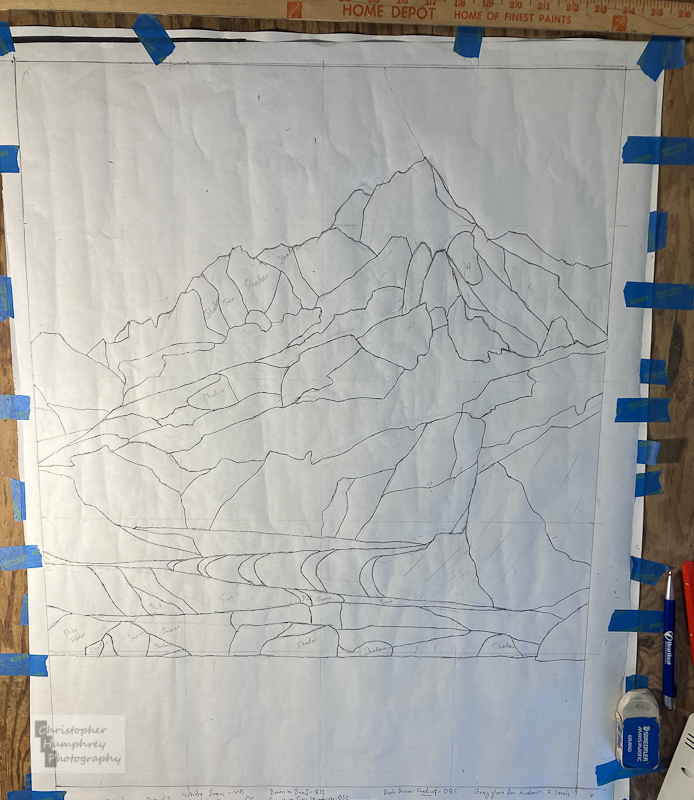
So what goes into stained glass? First there is the design, whether abstract or stylized, on the one hand, or representational, on the other. In some ways this is the most important part of the work: if the design is strong as a “cartoon,” the beauty of the glass will fulfill its potential. If it is not, the glass my be pleasing, but it won’t make the design work. (For me, anyway, all I will notice are the flaws.) Once the design is drawn, I work on experimenting with color on the computer.
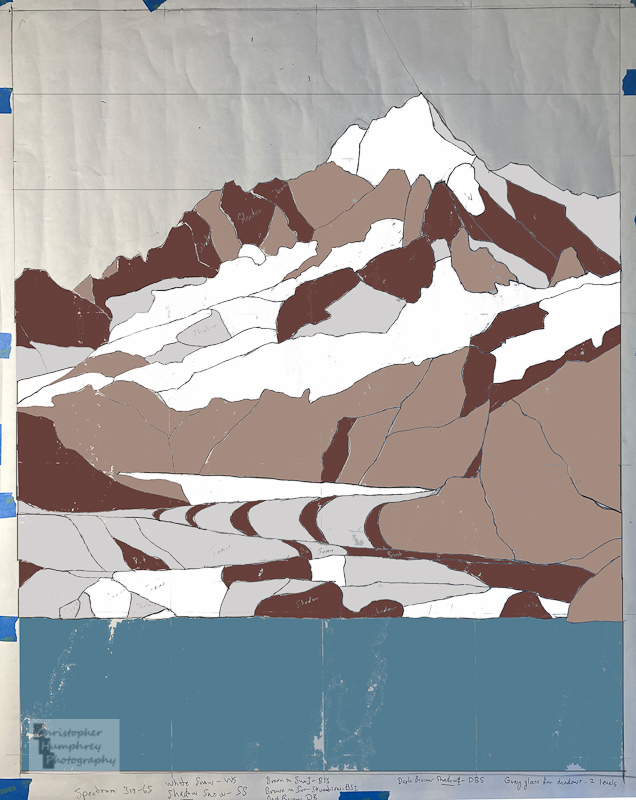
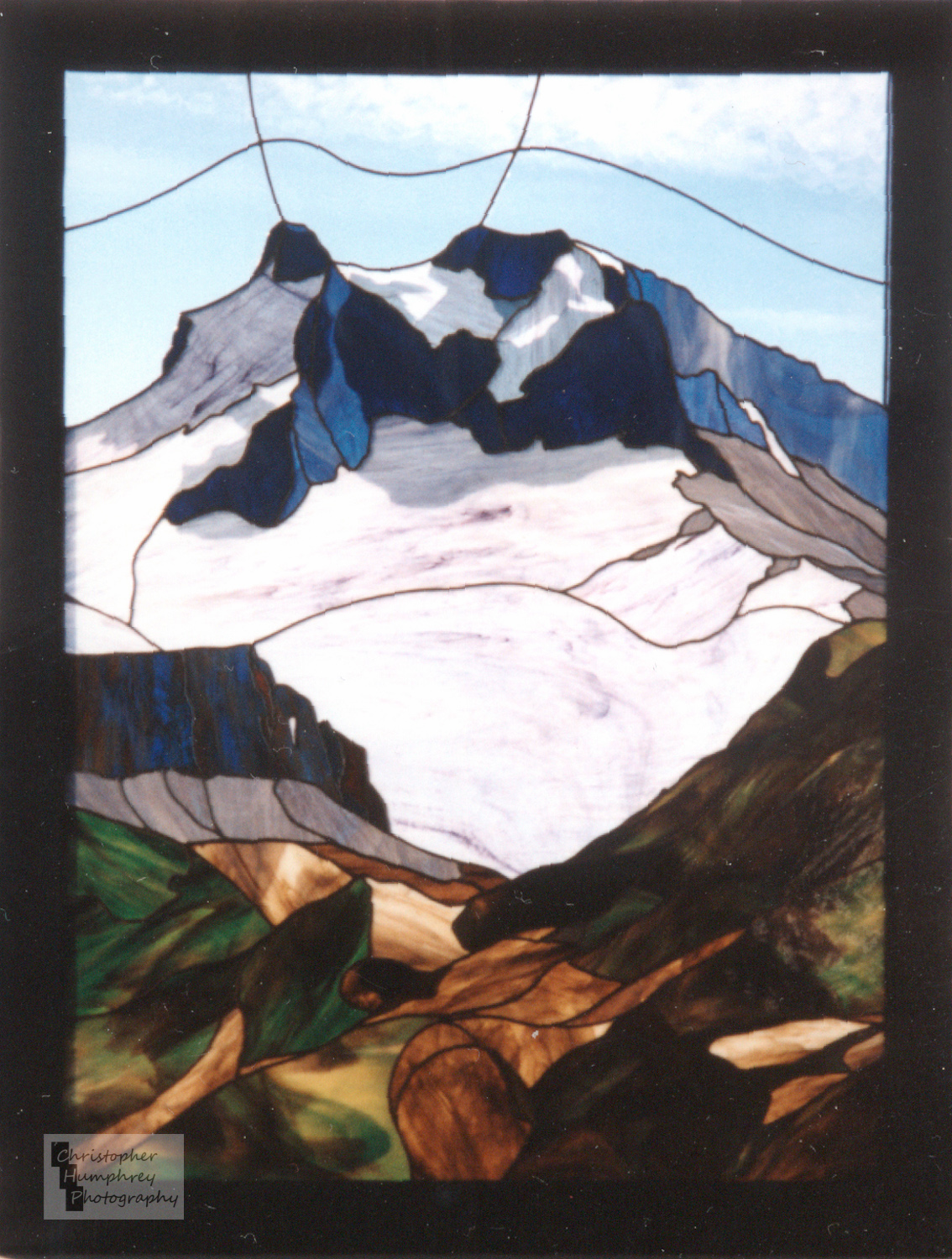
Then I choose the palette of glass: with too many colors, the mind can’t make sense of the pattern. With mountains, snowfields, and glaciers, you also want to show shadows. Tiffany used to layer glass behind glass to accomplish this. I did the same thing, using light-gray glass behind the foreground glass, with the piece BC Olympus, on the left. For Glacier Bay I, on the right, I used differently colored and textured glass, relying on the striations to indicate height or angle.
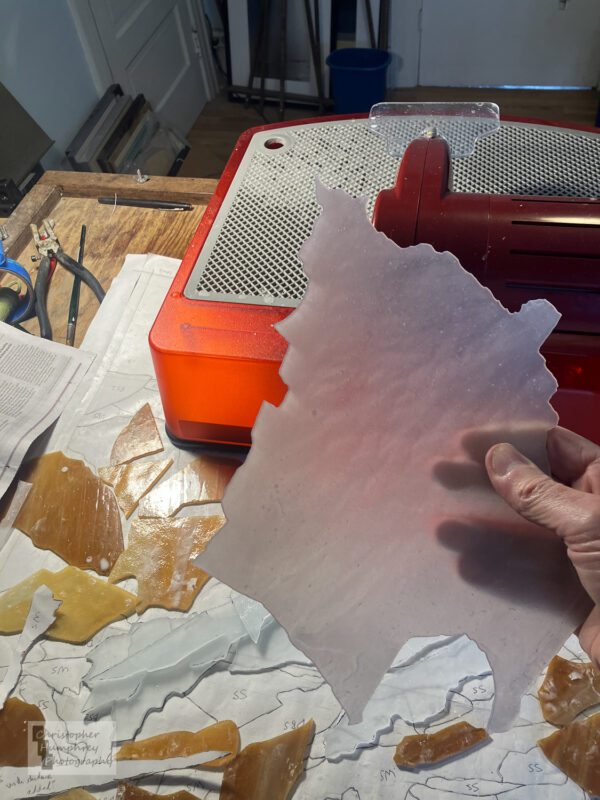
After I choose the glass, I set about copying the cartoon (using carbon paper under the original), then cutting out each paper piece from the copy, and marking the glass with a black magic marker around the paper shape. If the piece is at all complicated, so that a lot of time would be spent at the grinder, or glass wasted, I use my glass saw. First I glue the pattern piece to the glass (using rubber cement) so that I can guide the ring saw’s blade precisely. Then I start putting the pieces together, to make them all fit the pattern. This requires literally hours of grinding, especially for “glass-on-glass” pieces, as you want as little light as possible coming through the space between the pieces.
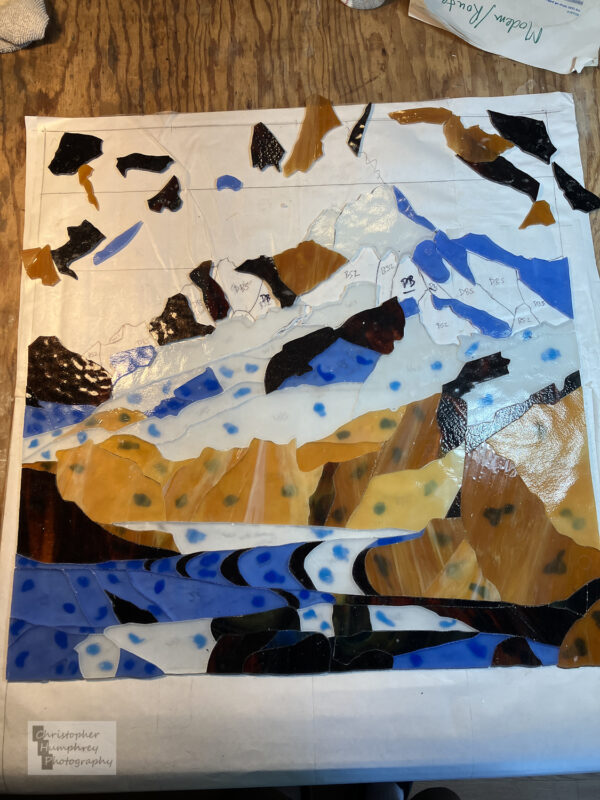
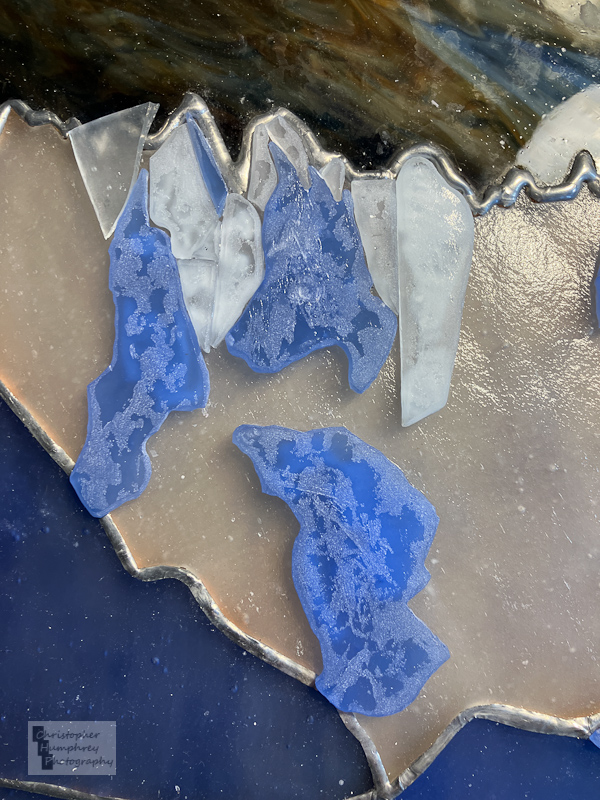
With standard stained glass work (copper foil), the process continues with the wrapping of the individual pieces of glass in the copper foil tape (sticky on one side), and the soldering of these pieces together. This gives you a panel that resembles the lead came ones found in many architectural pieces.
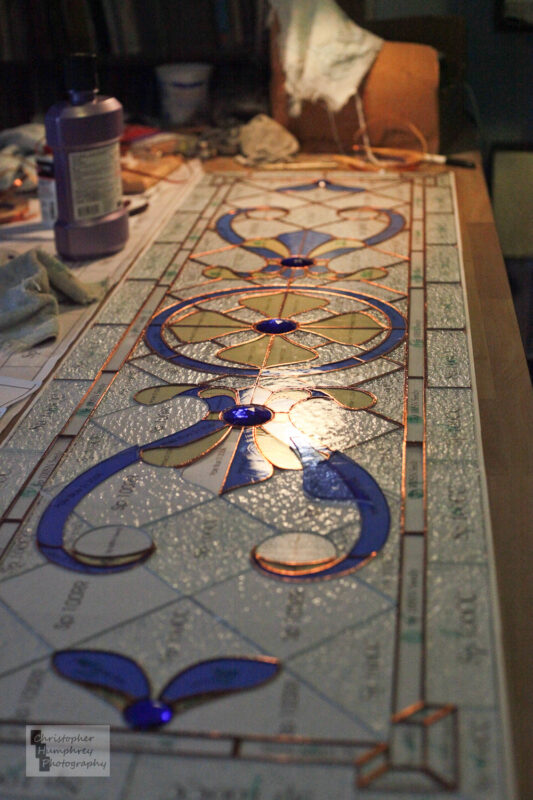
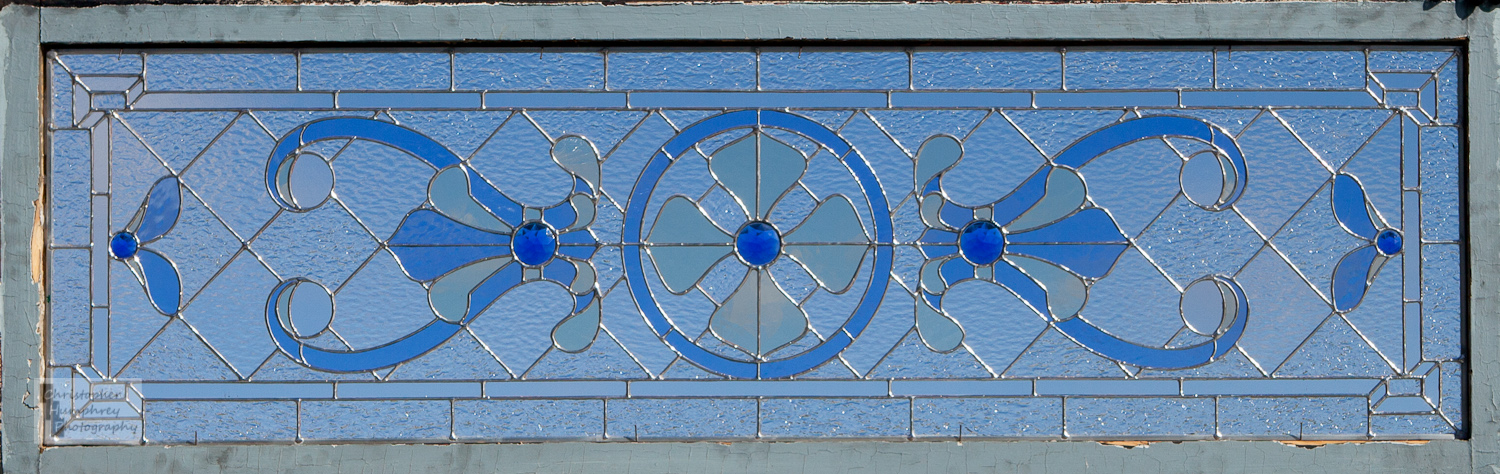
After soldering, the piece is framed in zinc “channel” (which gives it structural strength), cleaned of flux (a fluid used to make the solder flow and adhere to the copper), and rubbed with a polishing compound. Sometimes the piece is framed in wood instead of zinc.
With glass-on-glass pieces, the glue (Weldbond) takes weeks to cure. The piece can be hung, but it will not be ready for prime time until the glue is invisible. When it is ready, it can be photographed. Ideally it is captured with an even light behind it ,as well as in front, and no reflection.
It’s demanding, time-consuming work, but the result is a visual joy.
For other images of my stained glass work, and prices for my recent work, click here.
Leave a Reply